An outdoor sauna works in a Dubai summer because the heat inside the sauna is not the problem; the sun on the outside is. An unshaded dark timber roof reaches 70 °C in July, the cladding checks and greys within two seasons, and a heater compartment on the sunny side runs hot before anyone switches it on. Shade the cabin, ventilate the roof cavity, clad it in timber that tolerates ultraviolet, put the plant in the shade and use it in the evening, and a garden sauna in Jumeirah, Al Barari or Arabian Ranches works from June to September. This article explains each of those, and the outdoor sauna page lists the pavilions we build.
What the sun does to a garden cabin
Three failures we see on outdoor saunas built to a European drawing:
- Cooked insulation. The sun heats the roof, the roof heats the insulation, the insulation gives that heat back into the sauna all night, and the timber ceiling dries and splits.
- Grey, checked cladding. Untreated cedar or spruce loses its surface to ultraviolet in a summer, then absorbs humidity in the winter, and the boards cup.
- A heater compartment that is hot before use. Contactors and controls on the sunny side of the cabin sit at 60 °C in the afternoon, and their life halves.
Shade first
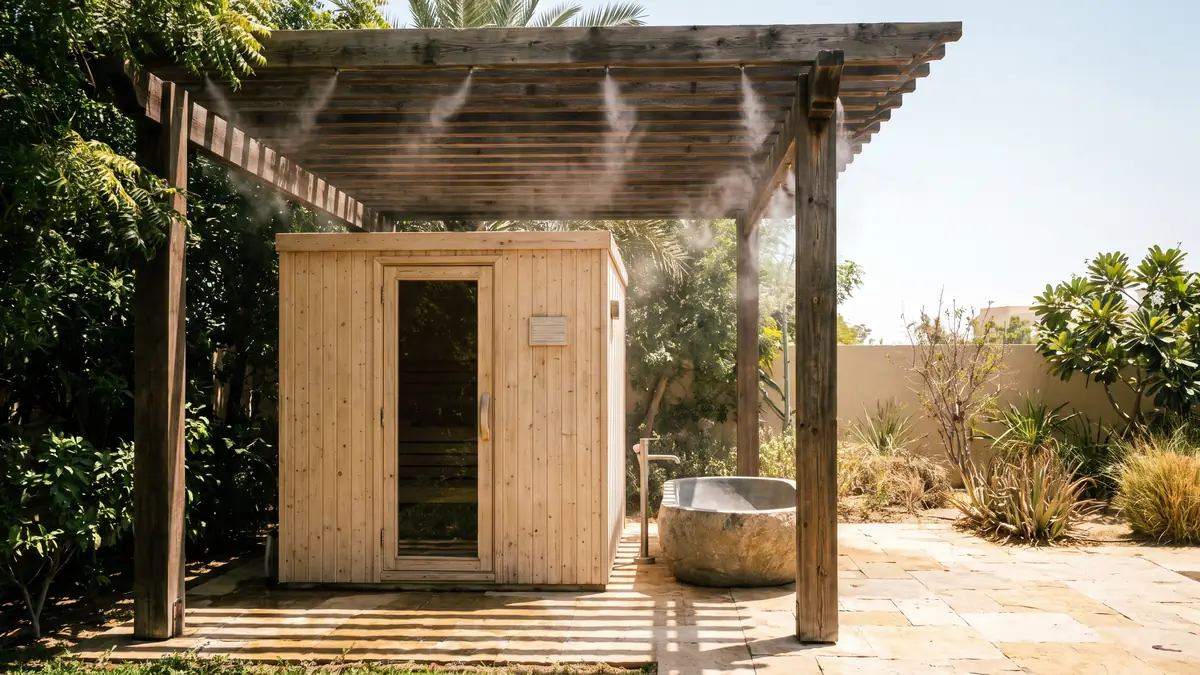
Before any detail of the cabin, decide what will stop the sun reaching it. The target is simple: direct sunlight on the walls and roof for no more than about an hour a day, from May to October. A slatted pergola, a generous overhang or a shade sail on steel posts all work, and so does an existing structure. In a Jumeirah courtyard the boundary wall does half the job; in Al Barari mature trees and a broad roof; in Arabian Ranches the pergola already standing by the barbecue. Glass goes on the north or east side, never towards the afternoon sun. The Jumeirah and Al Barari pages show where the cabin goes in each garden.
A roof that breathes
Build two roofs, not one. The inner roof is the insulated sauna ceiling; the outer one sits about a hand’s width above it, and the void between them is open at the eaves and the ridge. As the outer skin heats up, air in the void rises and escapes, pulling cooler air in behind it, so the insulation below sees shade temperature instead of the heat of a sun-baked roof. Finish the outer skin in standing-seam metal or a membrane on boards rather than bare timber. Of everything on a garden sauna, this detail does the most for the least money.
Cladding that tolerates ultraviolet
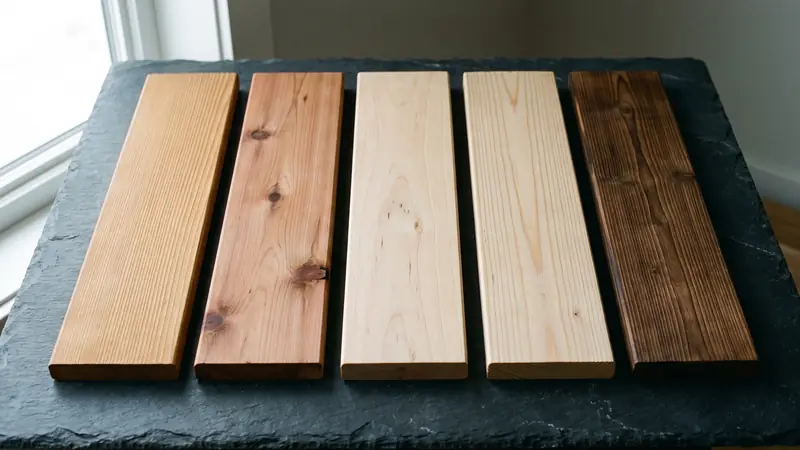
On the outside, use timber whose sugars and resins have already been driven out: heat-treated spruce or ash, or boards charred Japanese-style. Screw them with marine-grade stainless fixings through elongated holes, so each board can swell in humid February and shrink in dry June without splitting, and re-oil the face every year. Cedar survives if the boards are narrow and oiled on schedule; plain softwood does not. Inside, line the room in thermo-aspen, since a garden cabin swings between bone-dry and sticky air more than any indoor room. The best sauna wood guide compares the species.
Ventilation and the heater
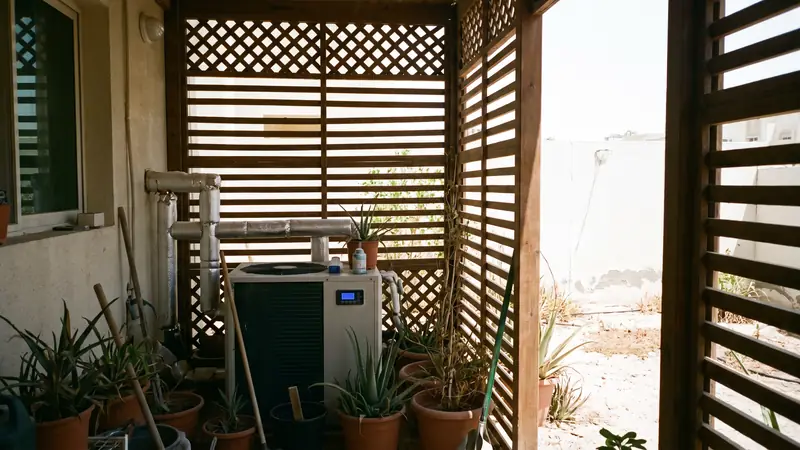
Air should enter low, behind the heater, through a dust filter on the shaded wall, and leave high on the far side through an extract that keeps running after the session to dry the benches. Choose the heater one size above what the indoor rule in the heater sizing guide gives. The reason is counter-intuitive: opening the door to warm, humid evening air adds moisture rather than cooling the room, and a heater with plenty of stone recovers the soft steam quickly. Keep contactors and the control unit in a vented box on the shady side, where electronics live longer.
Cold water beside it
Heat without somewhere to cool down is only half a session, and outdoors the cold is easy to add. Sink a plunge tub into the deck a few steps from the door, fix a shower to the cabin wall, and hide the chiller in a louvred box out of the sun. Summer tap water arrives at around 34 °C and the box can reach 45 °C, so the chiller must be rated for both, as our chiller sizing guide shows. For the rest between rounds, a fine misting line along the pergola takes several degrees off the deck.
When people actually use it
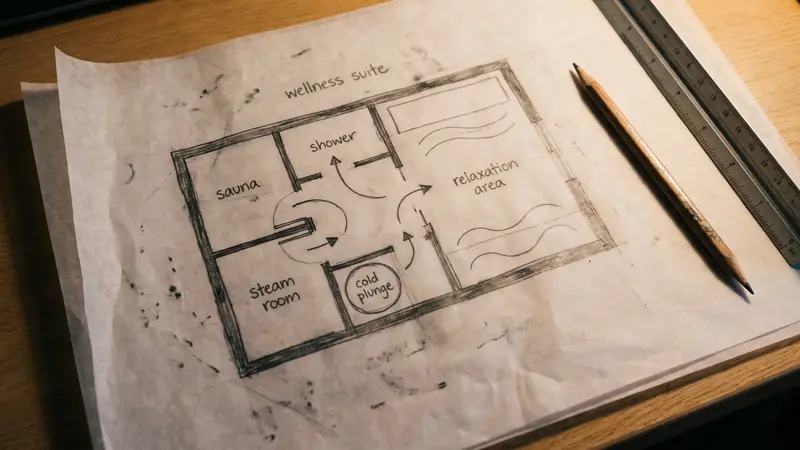
Evenings, from 8 pm, all year. A 40 °C evening after an 85 °C sauna feels cool, and the plunge is at its coldest after the chiller’s still afternoon. Daytime summer use is rare, which is why larger villas in Al Barari and Emirates Hills also build an indoor suite for the day, on the pattern of the villa wellness suite layout article, and use the pavilion from October to May in daylight.
What it costs
A compact cabin under an existing pergola from AED 180,000, a glass-fronted pavilion facing the pool AED 230,000 to 310,000, a pavilion with a plunge and shower AED 310,000 to 420,000, all turnkey with the shade structure, trench, plant and approvals. The pricing page has the benchmarks, and the community NOC for a garden structure is described on the DEWA approval page.
Share a picture of your garden on WhatsApp and mark where the sun sets; within one business day we will tell you where the shade has to go, which pavilion fits and roughly what it costs.