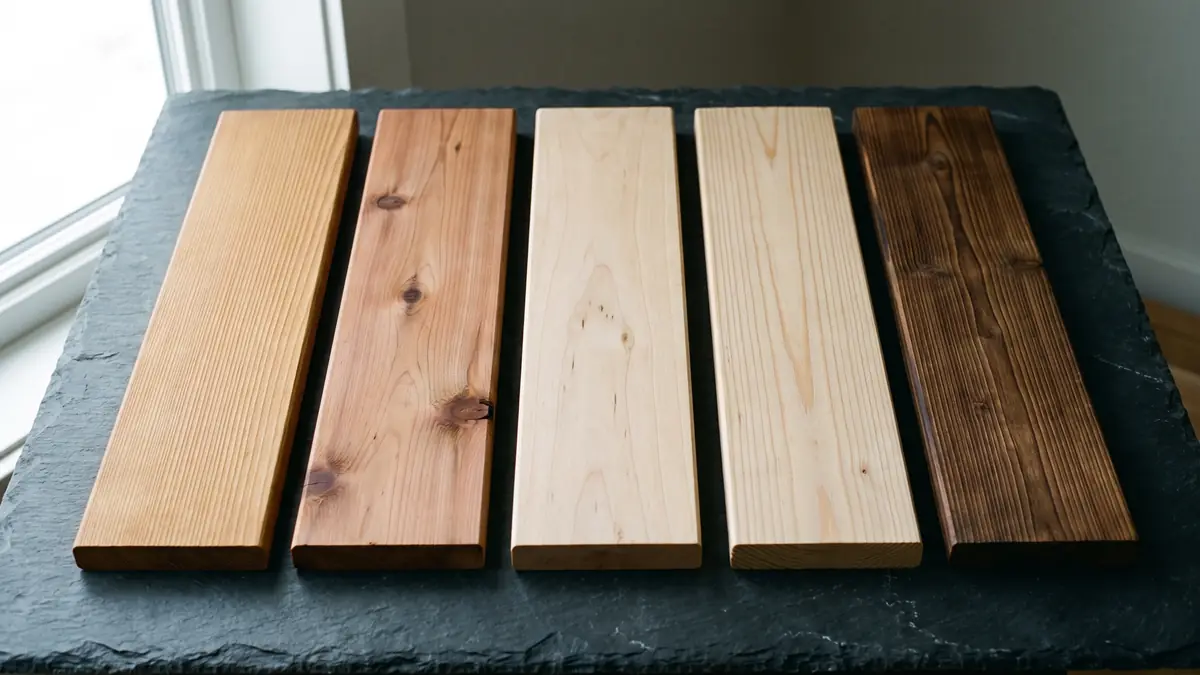
The best sauna wood for a UAE villa is thermo-treated aspen for the walls and benches, with alder as a pale alternative and western red cedar where the scent is wanted; outside, thermo-treated spruce or charred timber. The reason is not the heat of the sauna, which any sauna timber handles, but the air of the house around it: Dubai villas run at 20 to 30 % relative humidity under the AC, and untreated softwood shrinks, gaps and cups in that dryness. This guide compares the species on the criteria that matter here.
The problem is the house, not the sauna
A Finnish sauna lives in a house at 40 to 60 % humidity most of the year. A Dubai sauna lives in a house that the AC dries to 20 to 30 %, with the sauna door open between sessions. Timber equilibrates to that dryness and shrinks; tongue-and-groove boards open at the joints, bench slats cup, and a 100 mm board loses a millimetre or two of width. Sauna sessions then swing the timber the other way with heat and löyly. Two things counter it: species that have already lost most of their moisture in a kiln at 190 to 212 °C, and fixings that let boards move without splitting. Our custom sauna page describes the floating panel system we use.
Species compared for the UAE
| Species | Movement in dry air | Resin | Splinters | Scent | Colour | Best use | Cost vs aspen |
|---|---|---|---|---|---|---|---|
| Thermo-aspen | very low | none | none | mild | honey to caramel | walls, benches | baseline |
| Alder | low | none | none | mild | pale pink-cream | walls, benches in pale rooms | similar |
| Western red cedar | medium | low | low | strong, characteristic | red-brown, varied | walls, exterior with oiling | similar to +10 % |
| Hemlock | medium | none | low | neutral | pale | prefab cabins, infrared | −10 % |
| Thermo-spruce | low | none after treatment | low | mild | brown | exterior cladding, ceilings | −5 % |
| Thermo-ash | very low | none | none | neutral | dark brown | premium benches, feature walls | +25 % |
| Untreated pine or spruce | high | high | yes | resinous | pale, yellows | not recommended inside | −15 % |
Thermo-aspen: the default for a reason
Aspen is a light, even-grained hardwood with no resin and no knots to speak of. Thermal treatment at around 190 °C removes most of the bound moisture and the sugars, so the board is dimensionally stable, does not feed mould and does not darken unevenly. On a bench at 90 °C it stays cool enough to sit on, it does not splinter, and after ten years it is a deeper caramel. It is the timber in most of the saunas we build in Dubai Hills, Arabian Ranches and Emirates Hills, and it is the reason those benches look the same in the fifth summer as in the first.
Alder and cedar: the two alternatives
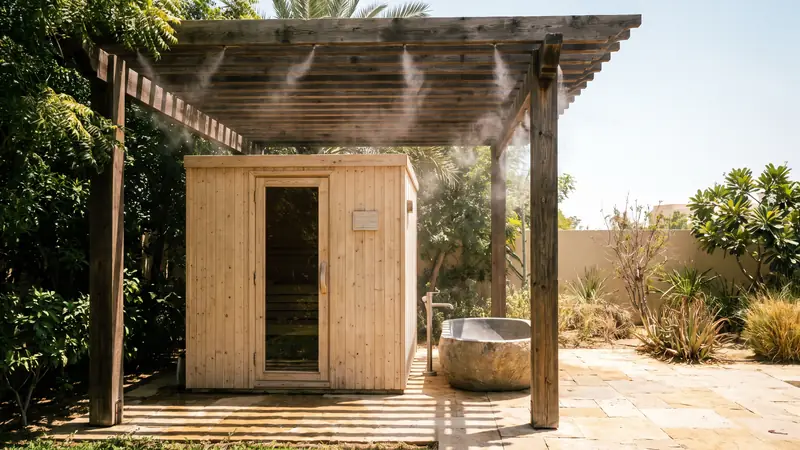
Alder is aspen’s pale cousin: stable, resin-free, slightly pink when new and fading to cream. It suits contemporary villas where the client wants an almost white room, and it costs the same. Western red cedar is the classic North American sauna timber, with the scent people remember from a hotel spa. It moves more than aspen in dry air, so we use narrower boards with floating fixings and we avoid it on benches where the oils can mark skin. Outdoors, cedar greys and checks within two Dubai summers unless oiled every year; thermo-treated spruce or charred timber lasts longer with less attention, as the outdoor sauna in summer article explains.
What not to use inside a sauna
- Untreated pine and spruce: resin at temperature, movement, splinters. Fine for a prefab cabin’s exterior, not for a bench.
- Dark tropical hardwoods such as teak, iroko or merbau: heavy, hot to the touch at 90 °C, and prone to surface checking in dry air. They belong on a deck outside the door, not inside.
- MDF, plywood or engineered boards anywhere near heat and humidity.
- Treated timber with chemical preservatives, which off-gas at sauna temperature.
Benches, backrests and the parts you touch
The bench is where timber quality shows. We use thermo-aspen or thermo-ash bench slats of 28 mm, 90 to 120 mm wide, with 8 to 10 mm gaps, rounded edges and a removable upper bench frame so it can be lifted for cleaning. Backrests and headrests are the same species; the heater guard rail too. Stainless 316 screws, countersunk and plugged, so no metal touches skin at 90 °C.
Exterior timber in a Dubai garden
Outside, the enemies are sun, sand and, near the coast, salt. Thermo-treated spruce and ash, or shou sugi ban charred timber, fixed with stainless screws in slotted holes, oiled once a year at the maintenance visit. A ventilated roof cavity over the sauna ceiling keeps the sun off the insulation, and a deep overhang keeps it off the cladding. Palm Jumeirah and Saadiyat terraces get 316-grade fixings and marine-rated oils; the details are on the Palm Jumeirah page.
Care: what a Dubai owner does once a year
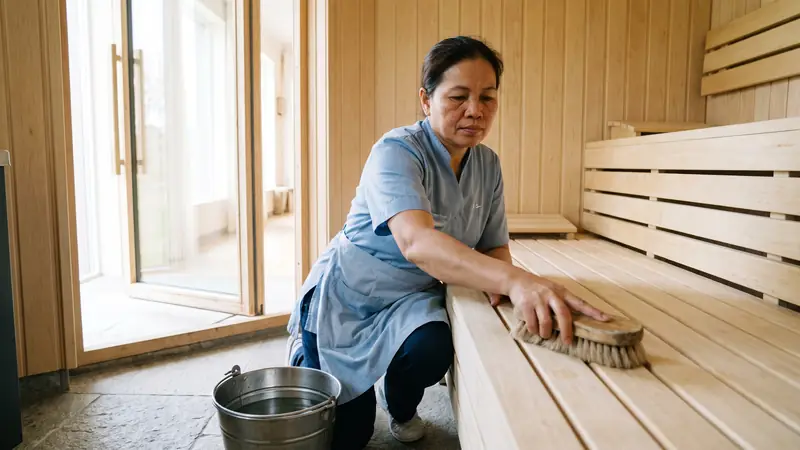
Brush the benches after use, leave the door open to let the room dry, keep oils and lotions off the timber, and once a year have the benches sanded lightly and the exterior oiled. The annual maintenance visit includes it, and the sauna maintenance checklist lists the monthly routine.
Send a photo of the room and tell us whether you want the pale, the honey or the red-brown room. We will specify the timber and show you the boards at the site visit.