Sharjah is a family emirate, and the spa that families build there starts with a wet, warm room: a hammam or a Moroccan bath, with a sauna beside it and a salt room for the children. The villas range from the newest master-planned communities, Al Zahia, Tilal City, Aljada and Sharjah Sustainable City, to established family districts with large plots and courtyards that have been in the same family for decades. We build across all of them, and in Ajman, with the same factory and installation crew that serve our Dubai clients. Below: the rooms Sharjah families ask for, the SEWA paperwork, the state of older electrical supplies, and indicative budgets.
What Sharjah families build
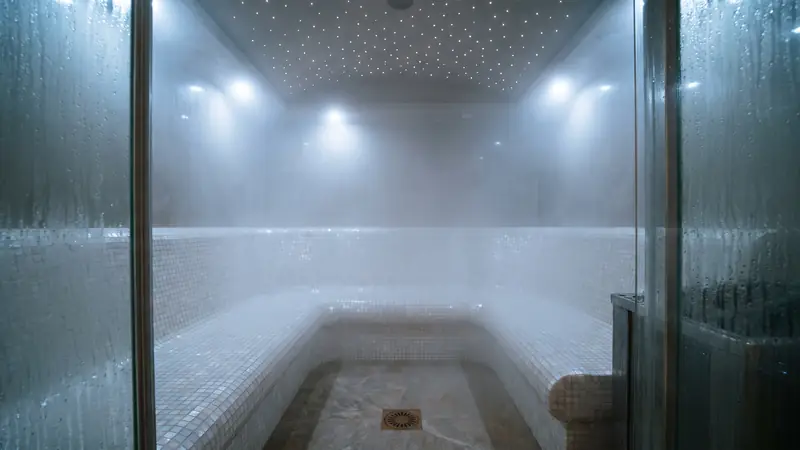
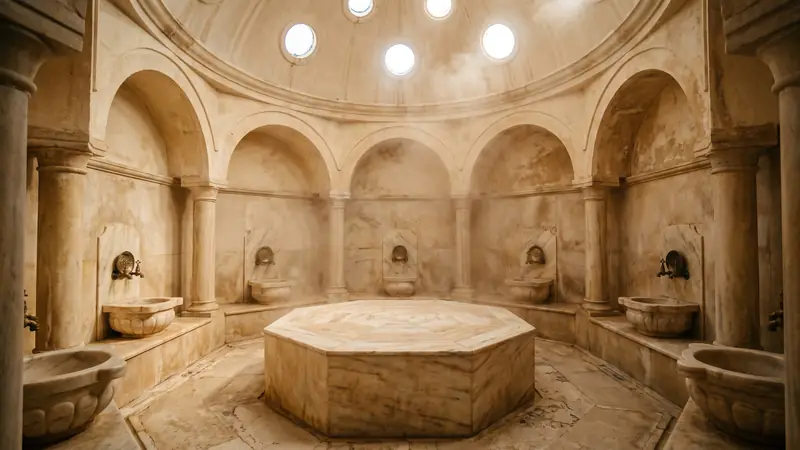
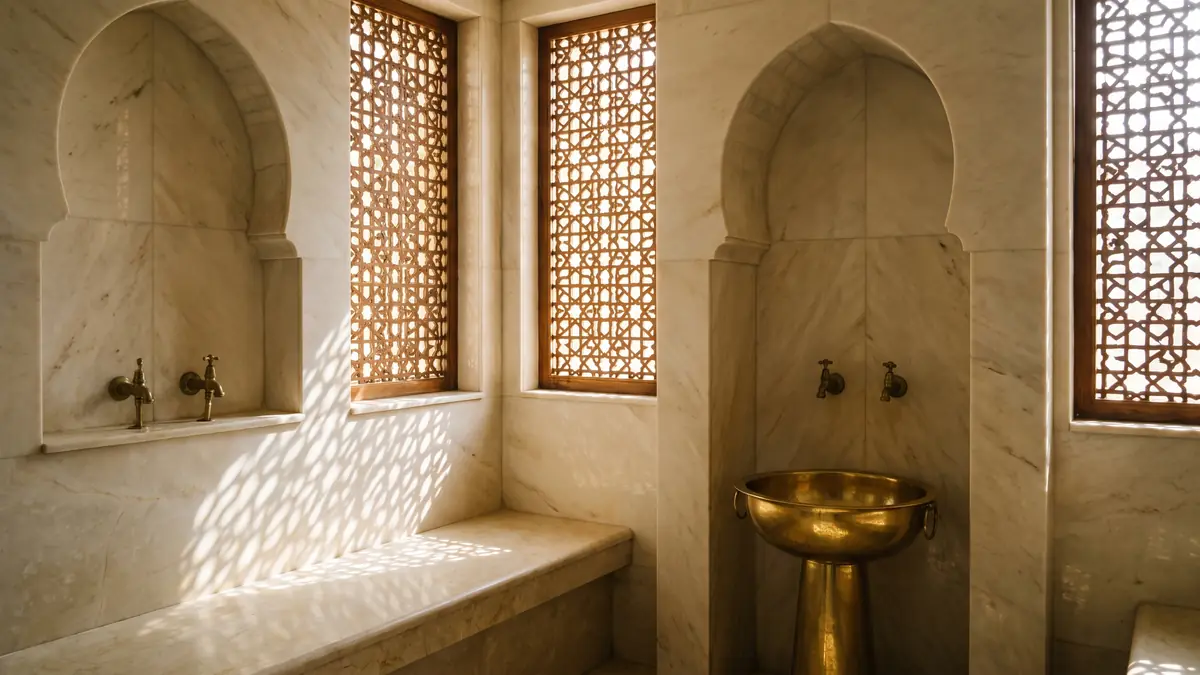
- A hammam as the family wet room. A hammam in the Moroccan register, with tadelakt walls, bands of zellige, arched niches, a heated bench and a brass basin, or a modern hammam with a heated slab under a starlight vault. Built for the black-soap and kessa ritual, and for the family to use together.
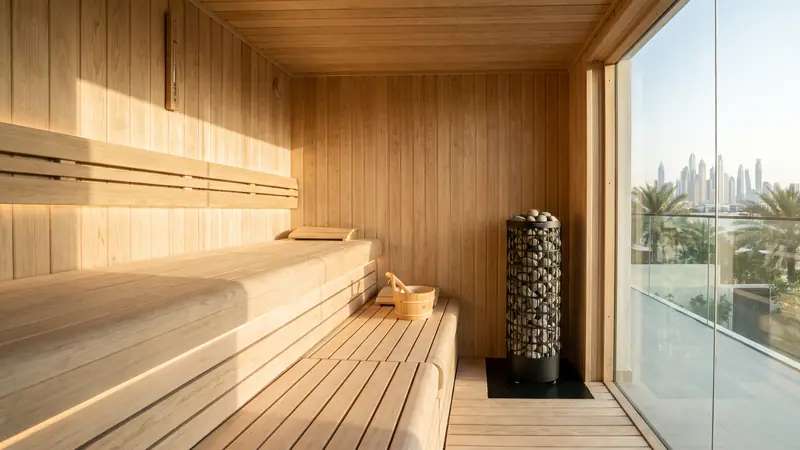
- A sauna and steam room pair. A custom sauna in thermo-aspen with a glass door and a steam room in mosaic sharing a corridor and a shower, with the plant in a cupboard between them.
- Salt and quiet for the younger ones. A cool, dry salt room whose coarse salt floor doubles as a play area, placed well away from the wet rooms.
- A full suite in the newer communities. Al Zahia, Tilal City and Sharjah Sustainable City villas with basements or large ground floors take a family villa wellness suite with the hammam at its centre.
- Mashrabiya and daylight. Sharjah villas often have courtyards and screened windows; we bring daylight into the hammam through mashrabiya screens and lightwells so the room is bright in the day and lantern-lit at night.
SEWA instead of DEWA
In Sharjah the electrical approval comes from SEWA, the Sharjah Electricity, Water and Gas Authority, rather than DEWA. Every new circuit, whether for a heater, a steam generator, a plunge chiller or the heating mats under a hammam slab, goes into one application prepared by a SEWA-registered consultant, backed by our wiring schematic and load figures. Approval normally takes two to four weeks and overlaps with manufacturing, so it rarely delays the programme; our Dubai guide to the approval process describes the same logic step by step. External structures such as a garden pavilion need a Sharjah Municipality permit, which we obtain with drawings and elevations. In Al Zahia, Tilal City and Aljada, the master developer’s community management also issues an NOC for service modifications, filed with the design set.
Older villas and their supplies
Established Sharjah family villas were often built with 100 to 150 A supplies and DB boards that have grown crowded with AC circuits over twenty years. A hammam with a steam generator and slab heating is a 15 to 20 kW load, which those boards cannot always take. We check at the free site visit, and where the supply is full we manage a SEWA load enhancement before the equipment is ordered; it adds four to eight weeks and is worth doing once for the whole house. Newer community villas have modern three-phase supplies with spare capacity and rarely need it.
Water, waterproofing and hard water
Sharjah’s supply is as hard as Dubai’s, so steam generators and hammam boilers get automatic drain cycles and a scale filter on the feed, and descaling is part of the annual service. Every wet room is tanked in cementitious waterproofing with a bonded membrane over it and flood-tested for 48 hours before the tadelakt, tile or stone goes in; in family rooms used daily by several people, that discipline is what keeps the room dry under the floor for twenty years. The waterproofing mistakes article shows what we find when it was skipped.
Typical budgets in Sharjah
| Project | Indicative range (AED) |
|---|---|
| Moroccan bath with heated bench | 260,000 – 480,000 |
| Modern hammam with heated slab | 180,000 – 450,000 |
| Custom sauna and steam room pair | 170,000 – 300,000 |
| Children’s salt room | 130,000 – 220,000 |
| Family spa built around a hammam | 600,000 – 1,200,000 |
These are indicative and confirmed after a site survey; the pricing page holds the full list. Work in Sharjah and Ajman is priced as in Dubai, with a day rate added for the crew’s travel.
How the project runs in Sharjah
It starts on WhatsApp with photos and a picture of the DB board, and our first answer arrives within one business day. After a free visit to the house we draw a concept with a price range, then the full drawings go to SEWA and, if needed, to the municipality while the rooms are made in our factory. Allow twelve to twenty weeks for a hammam and eight to twelve for a sauna; the process page sets out payments and stages. Families further west can read the Abu Dhabi page, where ADDC plays SEWA’s role, and our article on how hammam rituals shape the room helps choose between the Moroccan, Turkish and modern versions. Ajman, on Sharjah’s northern border, has its own page, including the approvals for apartments and villas there.
Tell us the district and send photos of the room or courtyard with the DB board; in return you get what fits, the SEWA route, pictures of hammams we have finished and a first budget band.