A cold plunge chiller for a Dubai villa has to be sized for water arriving from the tap at 32 to 35 °C in August, a plant enclosure at 40 to 45 °C, and a basin that gains heat through every uninsulated surface all day. Under those conditions a 1.5 HP chiller with an insulated 800-litre indoor basin holds 5 to 8 °C; a 2 HP unit does the same for a 1,200-litre outdoor plunge. Half of that, which is what European datasheets suggest, settles at 12 to 15 °C and runs continuously. This article explains the arithmetic and the three mistakes that produce a warm plunge.
Three heat loads, not one
A chiller does three jobs, and only the first is on the datasheet.
- Pull-down. Cooling the initial fill from tap temperature to set point. In Dubai in August that is 34 °C to 6 °C, a 28-degree drop; in Munich it is 15 °C to 6 °C, nine degrees. The Dubai pull-down needs three times the energy, and with a small chiller it takes two days.
- Heat gain. Heat leaking into the basin from the room, the slab, the sun and the users. An uninsulated fibreglass tub in a 30 °C room gains heat faster than a 1 HP chiller can remove it; an insulated basin in an air-conditioned spa gains a fraction of that.
- Condenser derating. The chiller dumps heat to the air through its condenser. Rated capacity assumes 25 to 35 °C air; at 45 °C the same unit delivers 50 to 65 % of its rating, and if the enclosure has no airflow it stalls on high-pressure cut-out.
The cold plunge page sets out the basin formats we build; this is why each one carries a chiller a size larger than the catalogue suggests.
Sizing table for Gulf conditions
| Basin | Volume | Location | Insulation | Chiller | Holds in August |
|---|---|---|---|---|---|
| Indoor stone basin, one person | 600–800 L | air-conditioned spa | 50 mm closed-cell, all faces | 1.5 HP | 5–7 °C |
| Indoor basin, two persons | 1,000–1,400 L | air-conditioned spa | 50 mm, all faces | 2 HP | 6–8 °C |
| Outdoor plunge, shaded | 1,200–1,800 L | terrace, insulated cover | 75 mm, all faces | 2–3 HP | 7–10 °C |
| Pool-type plunge | 2,000–3,000 L | garden, plant room | 75 mm, cover | 3 HP+ | 8–10 °C |
| Portable tub, uninsulated | 400–600 L | anywhere | none | 1 HP | 12–16 °C |
The last row is why so many Dubai owners believe a plunge cannot be cold in summer. It can; the tub was never going to be.
The condenser needs shade and air
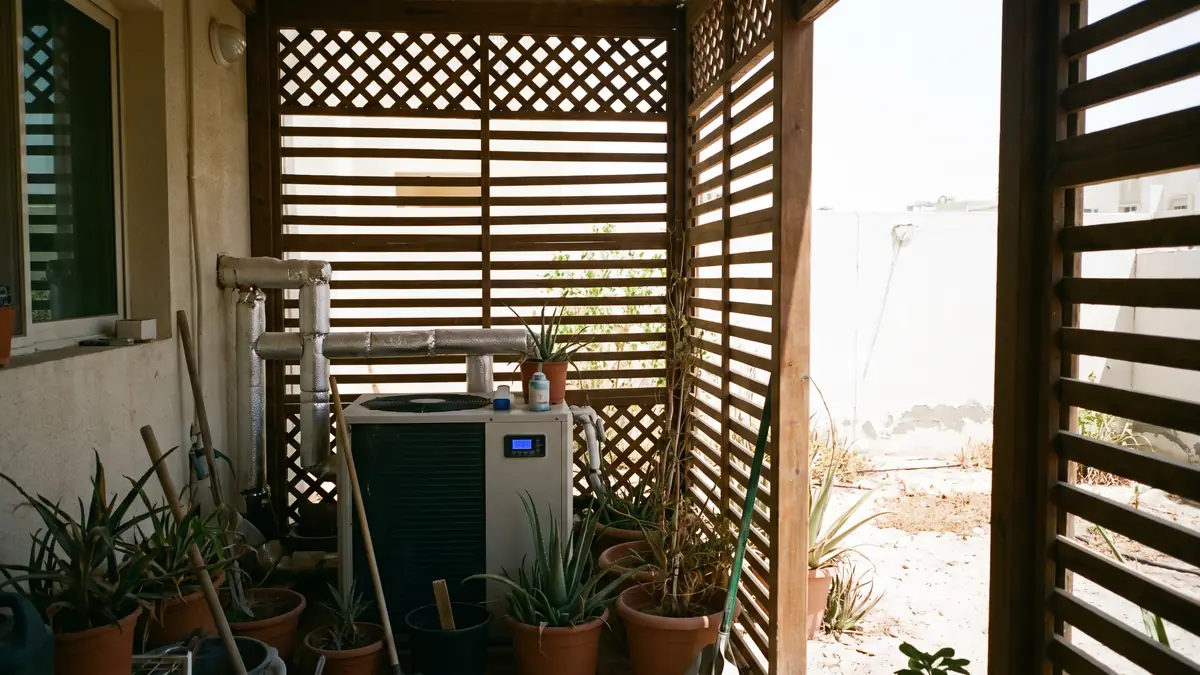
The single most common fix on our repair calls is moving the chiller. A condensing unit in a closed plant cupboard, or on a terrace in the afternoon sun, or in a planted corner in Al Barari with still humid air, cannot reject heat. We put it in a ventilated enclosure with louvres on two sides and a clear path for the hot exhaust, in shade all day, with at least 500 mm around the coil, and on Palm Jumeirah and Saadiyat with a marine-rated coil. A condenser that breathes is worth half a horsepower.
Insulation like a freezer
The basin is a freezer that people climb into. We line the shell with 50 mm of closed-cell foam on the floor and walls, 75 mm outdoors, isolate it from the slab with a thermal break, insulate the pipework to the chiller, and fit an insulated cover for the hours nobody is using it. An insulated basin in an air-conditioned spa gains so little heat that the chiller cycles a few minutes an hour; the same basin bare against a warm slab runs the chiller all day and still loses.
Water quality and scale
Dubai water is hard and the chiller’s heat exchanger is the first thing scale attacks. A scale inhibitor on the fill line, a 20-micron filter and an ozone or UV sanitiser on the circulation loop keep the water clear for a month between changes and keep the exchanger clean for years. Without them, the water clouds in a week and the chiller loses capacity as scale insulates the exchanger from the inside.
What it costs to run
A 1.5 HP chiller draws about 1.3 kW when running. Holding an insulated indoor basin at 6 °C in August it runs perhaps six to eight hours a day, about 9 kWh, at the upper DEWA slab AED 4 a day, AED 90 to 120 a month. An outdoor 2 HP plunge with a cover runs longer, AED 120 to 180 a month. In winter, when tap water is 18 to 22 °C and the terrace is 25 °C, both halve. An uninsulated tub with a condenser in a hot cupboard costs two to three times as much and never reaches temperature.
Placement in the spa sequence
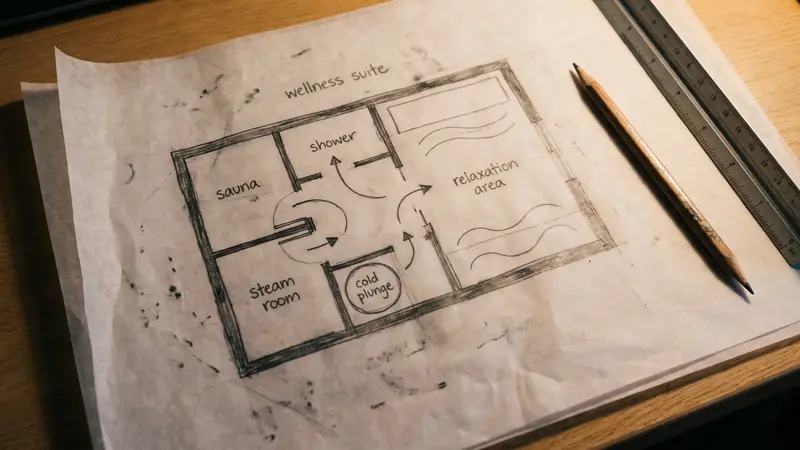
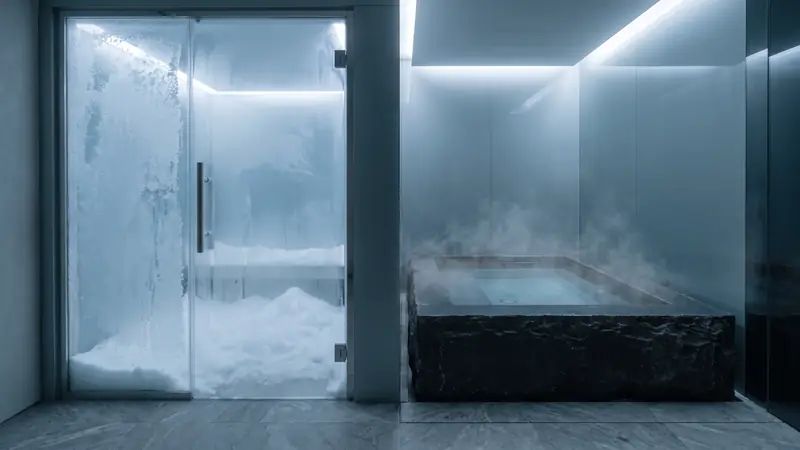
The plunge belongs three steps from the sauna door, so the walk from 85 °C to 6 °C is short enough that nobody skips it. In basements we set it into the corridor opposite the sauna; on terraces beside the outdoor sauna pavilion. The villa wellness suite layout article draws the sequence, and the contrast therapy protocol explains how long to stay in and why colder is not better. Where the family wants cold without submersion, a snow room is the alternative; the comparison is honest about both.
Send a photo of where the basin would go and where a chiller could sit outside. We will reply with the basin size, the chiller rating and the running cost for your situation within one business day.