Downtown Dubai, Business Bay and DIFC are vertical, and a sauna here is a negotiation with building management before it is a design. The good news is that most towers say yes to the right proposal: a plug-in infrared cabin with a specification sheet, or in penthouses and duplexes with three-phase supply, a compact glass sauna with a dedicated circuit and a fit-out permit. This page explains what works in Downtown apartments and penthouses, how the building approval runs, and how a cabin gets to the fortieth floor.
What Downtown owners install
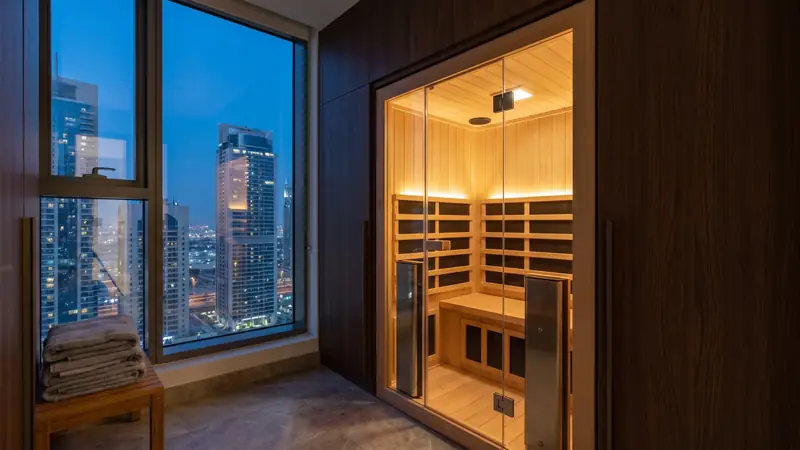
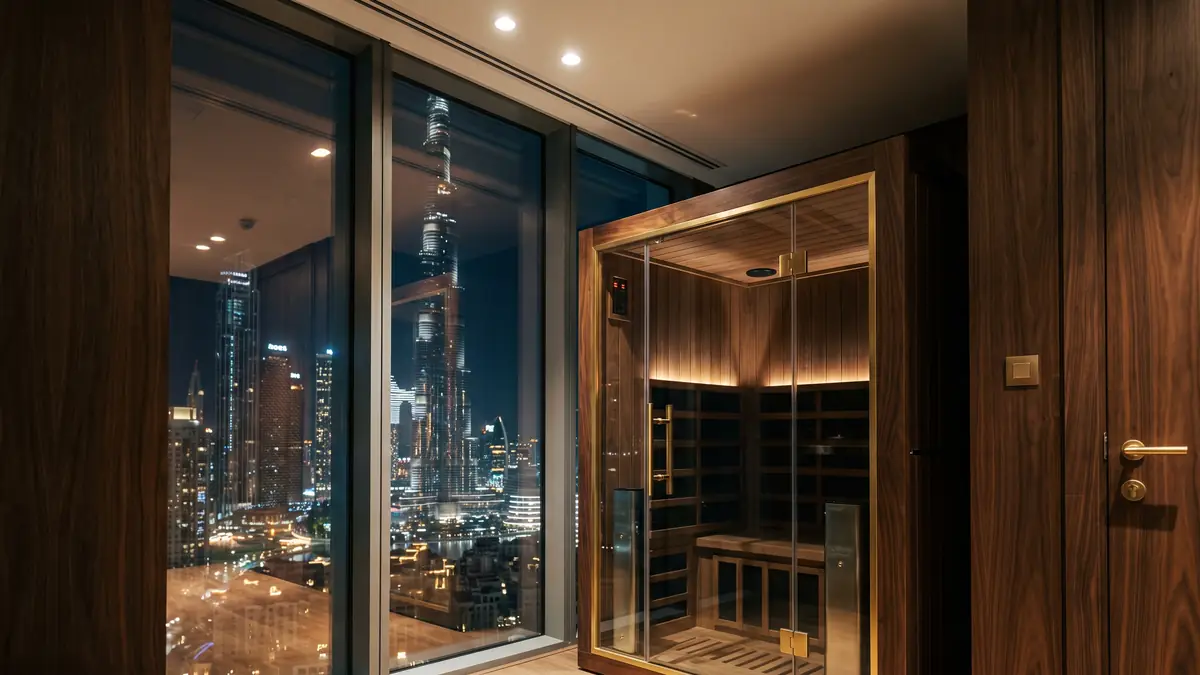
- An infrared cabin with a view. The most common Downtown project: an infrared cabin in the dressing room or beside the bedroom window, positioned so the glass front faces the Burj Khalifa or the fountain. Runs on a socket circuit, needs no drain and no vent, and passes building management with a specification sheet.
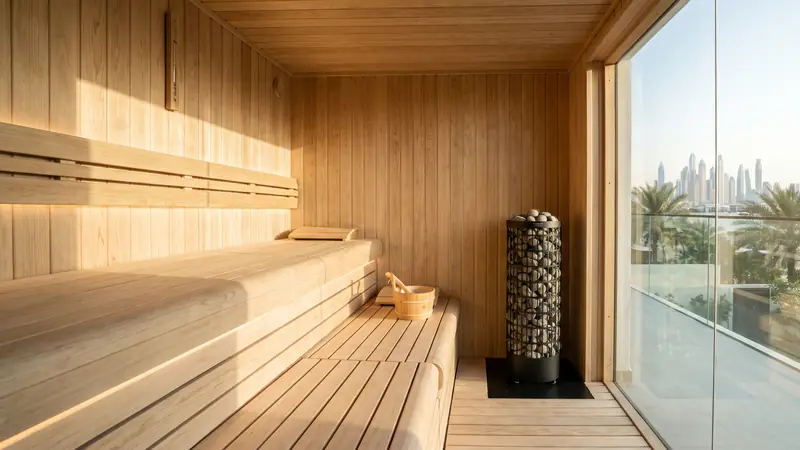
- A compact glass sauna in a penthouse. In duplexes and penthouses in the Opera District, the Address residences and the Burj Khalifa itself, where the supply is three-phase, a two- to four-seat custom sauna with frameless glass and a 6 to 9 kW heater.
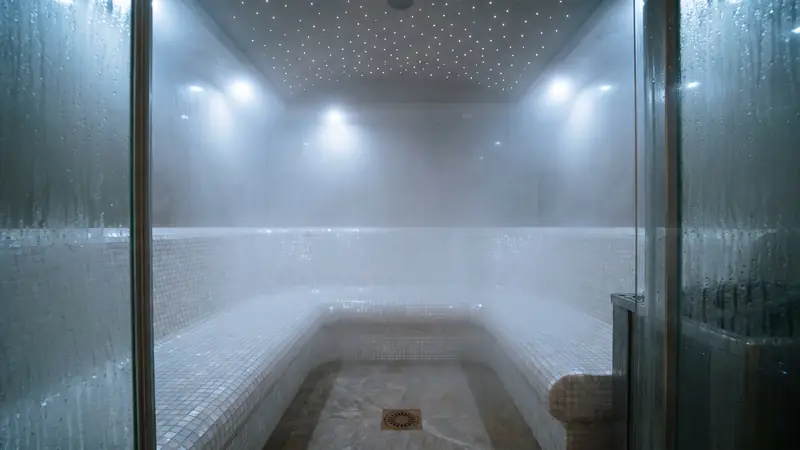
- A steam shower. Where the master bathroom has a large enclosed shower with a drain, a steam room conversion with a 4.5 to 6 kW generator in the ceiling void.
- A soft-shell hyperbaric chamber. Increasingly requested by Downtown and DIFC residents for recovery: a hyperbaric cabin in a spare bedroom with a ventilated window and a standard circuit.
Getting the building to say yes
Every Downtown tower has a fit-out process, and saunas fail it for predictable reasons: undefined electrical load, a wet room without a drain, and contractors who cannot answer the engineer’s questions. What we submit, and why it works:
- The manufacturer’s specification sheet with the rated power and the socket or circuit type.
- A single-line statement of the circuit the cabin will use, confirmed from a photo of the apartment DB board.
- A floor plan marking the cabin position and clearances.
- For a traditional heater, a load calculation and the DEWA submission, prepared by our consultant, because the building’s own engineer will ask for it.
- A method statement for delivery through the service lift, with dates.
Submitted this way, infrared cabins are approved in days and traditional saunas in penthouses in two to four weeks. Our apartment sauna guide walks through it tower by tower.
Single-phase, three-phase and what that decides
Standard Downtown apartments have single-phase supplies of 60 to 100 A. That takes an infrared cabin of 1.7 to 3 kW on a dedicated socket circuit, and in some cases a 4.5 kW compact sauna heater on its own circuit, which is the largest single-phase heater we install. Penthouses and duplexes frequently have three-phase supplies of 100 A and up, which take a 6 to 9 kW heater and a small steam generator. A clear photo of the open DB board tells us which of these applies before anyone visits, so the first conversation is about what the apartment can take; the arithmetic behind heater ratings is in our guide to sizing a sauna heater.
Delivery on the fortieth floor
At the survey we measure the service lift car, its door and every corridor turn between the lift and the room, and the factory cuts the cabin into panels that clear the tightest of them. The delivery slot is agreed with the building’s security team; everything travels up together, protected, and assembly happens inside the apartment: a morning for an infrared cabin, two or three days for a glass sauna. Packaging goes down with the crew. No panel is trimmed in the corridor and nothing waits in a stairwell, which is the real concern of any tower’s management.
Typical budgets in Downtown Dubai
| Project | Indicative range (AED) |
|---|---|
| Infrared cabin for two, supplied and fitted | 34,000 – 44,000 |
| Full-spectrum cabin for three | 44,000 – 55,000 |
| Glass-fronted sauna for a penthouse, 2–4 seats | 65,000 – 140,000 |
| Steam shower conversion | 75,000 – 95,000 |
| Soft-shell hyperbaric chamber with ventilation | 95,000 – 140,000 |
The benchmarks are on the pricing page.
Towers we know from the inside
Tower work is not new to us. In DIFC we fitted out an office-tower spa from shell and core, with saunas, steam rooms and cold plunges on a 58 kW connected load, which meant threading plant, drainage and extract through a building that was never designed for them. An apartment cabin is a far smaller job, but the questions from the building’s engineer are the same ones, and we answer them before they are asked.
How the project runs in a tower
It begins with photos and the DB board on WhatsApp and a reply on what the supply allows within one business day. Next comes a free visit to measure the lift and the room, then the building submission, which we prepare, and finally delivery and installation. Expect one to two weeks overall for an infrared cabin and eight to twelve for a custom sauna; stages and payments are listed on the process page. The same approach applies in the towers of Dubai Marina and JLT, and the villas of Jumeirah next door follow the villa rules instead.
Send a photo of the room, the window and the DB board on WhatsApp, and name the tower. You will have an answer by the next business day: what the building is likely to approve and an itemised price.