A salt room keeps its air cool and dry, around 21 °C with humidity below half, while a halogenerator mills pharmaceutical salt into particles of one to five microns that you breathe during a session of thirty to forty-five minutes. Dubai has taken to salt rooms faster than most cities, and the reason is in the air outside: dust, sandstorms, construction and air-conditioning that dries the airways for eight months of the year. This article explains what dry salt therapy does, what the evidence supports, and how to build a salt room in a villa that stays dry.
What halotherapy is
A halogenerator is a compact grinder and fan: it crushes pure sodium chloride and releases the dust into a closed room at a set dose. There is nothing to do but rest and breathe as usual. The particles are small enough to reach the airways, and users commonly report that breathing feels easier afterwards and that skin feels calmer. Sessions are thirty to forty-five minutes, typically two or three a week.
What the evidence supports, and what it does not
Halotherapy is used in wellness centres across Europe and in Dubai clinics, and there are small studies reporting symptom relief for some respiratory complaints. There is no evidence that it cures asthma, allergies or infections, and we do not claim it does. Treat it as a place to relax, not a therapy. If you live with asthma, COPD or any lung condition, talk to your doctor before regular sessions, and never let a salt room replace medication you have been prescribed. The salt room page carries the same statement, because a builder that oversells a wellness room is not one to trust with the ventilation.
Why Dubai families build them
Three things in the local air push people towards a salt room. Dust and sand, which settle in the airways in the transition months and during shamal winds. Construction dust in growing communities such as Dubai Hills, Tilal Al Ghaf and Al Zahia. And the AC, which dries indoor air to 20 to 30 % humidity and with it the nose and throat. Families with young children build salt rooms with a salt play floor; adults use them as the quiet room of the suite, on the dry side away from the steam. The Arabian Ranches page describes the family pattern.
The room only works dry
Dry salt aerosol needs dry air. A salt room that shares air with the pool area, opens onto a steam room corridor or is fed by the villa’s return-air grille absorbs humidity, and the salt on the walls and in the halogenerator clumps. The room needs:
- Its own supply-and-extract unit with a G4 and F7 filter, feeding 20 to 22 °C air and holding humidity below 50 %.
- A slight negative pressure to the corridor, so the aerosol never migrates into the villa’s AC ducts, where salt corrodes coils.
- A door that seals, and a position on the dry side of the suite.
- A controller that logs humidity and shuts the halogenerator down if the room drifts wet.
This is the part imported salt rooms in Dubai most often skip, and it is why they smell of damp within a year.
Walls, floor and loungers
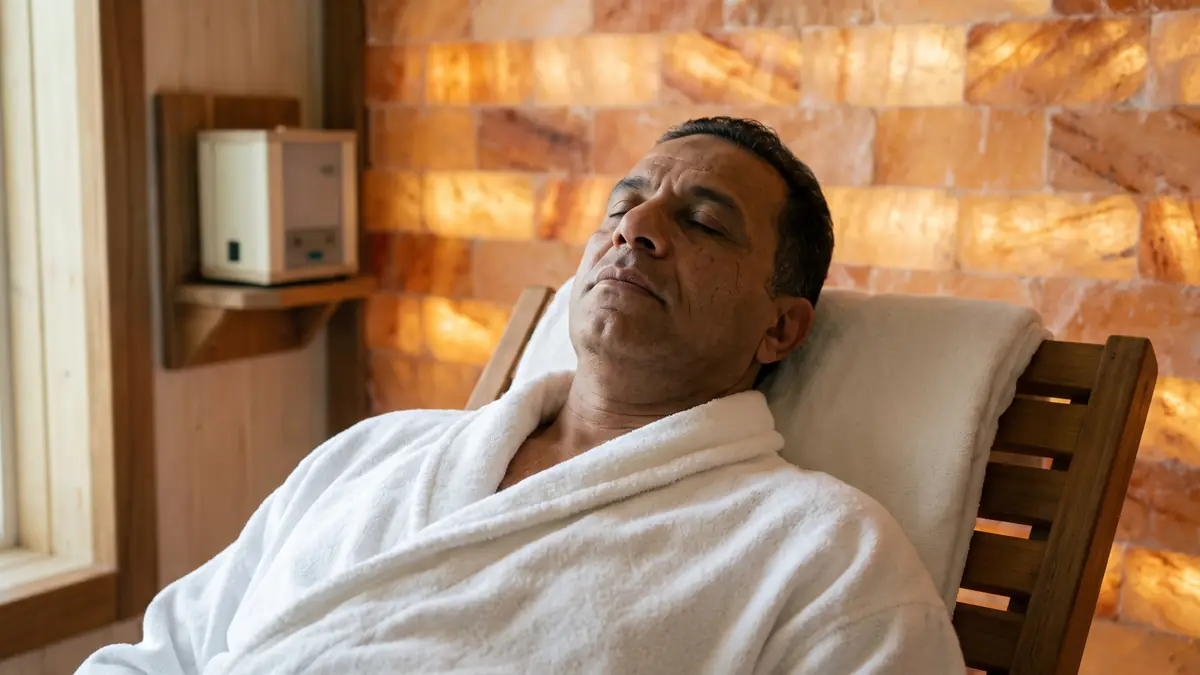
The look comes from pink salt bricks glowing with warm light from behind, usually on one feature wall, sometimes two. Underfoot, a few centimetres of coarse salt over a sealed base, raked each week and renewed each year. Reclining loungers with light blankets, remaining walls in plaster, timber or micro-cement, and nothing that traps salt or corrodes: no upholstery, no chrome taps. Remember the division of labour: the bricks set the mood, the machine delivers the aerosol.
Sizes and costs
| Salt room for | Floor area, roughly | Indicative turnkey (AED) |
|---|---|---|
| Two people | 6 m² | 90,000 – 130,000 |
| A family of three or four | 11 m² | 130,000 – 180,000 |
| A family, with a salt floor for children to play on | 14 m² | 180,000 – 220,000 |
Running cost is small: the halogenerator draws under 500 W and the air handling 1 to 2 kW, perhaps AED 60 to 120 a month. Salt for the halogenerator is a few hundred dirhams a year; the floor salt is replaced at the annual service under the maintenance plan. Benchmarks are on the pricing page.
Where it sits in the suite
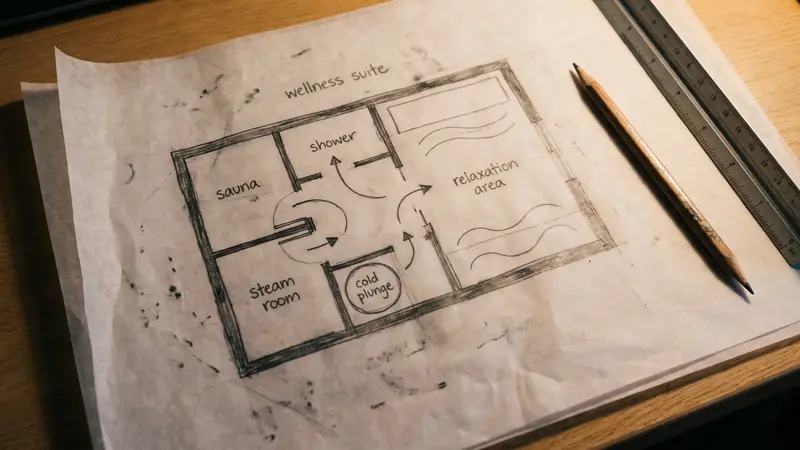
Put it where the air is calm and dry: next to the rest lounge, and near a hyperbaric cabin if the suite has one, but never beside the steam room. Our layout guide for villa wellness suites shows this recovery wing on plan. Because there are no wet works, just a cleaning drain, one modest circuit and a duct run to an outside grille, a salt room is among the simplest rooms to retrofit.
Tell us on WhatsApp who would use the room and send a photo of it; by the next business day you will have a suggested size, the duct route and an indicative price.