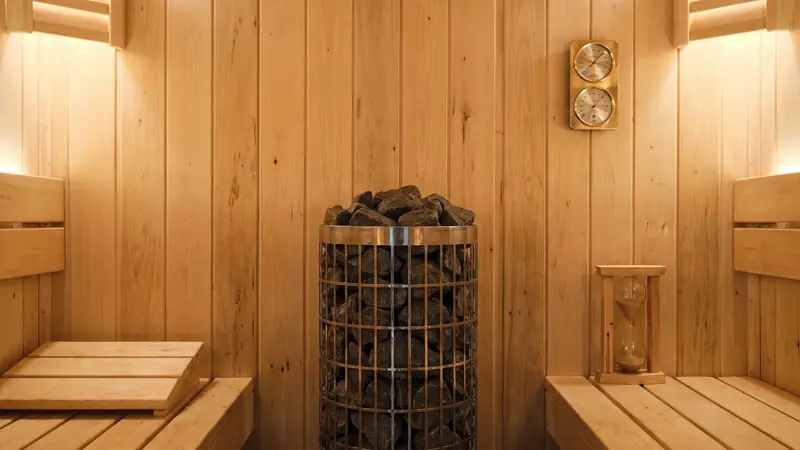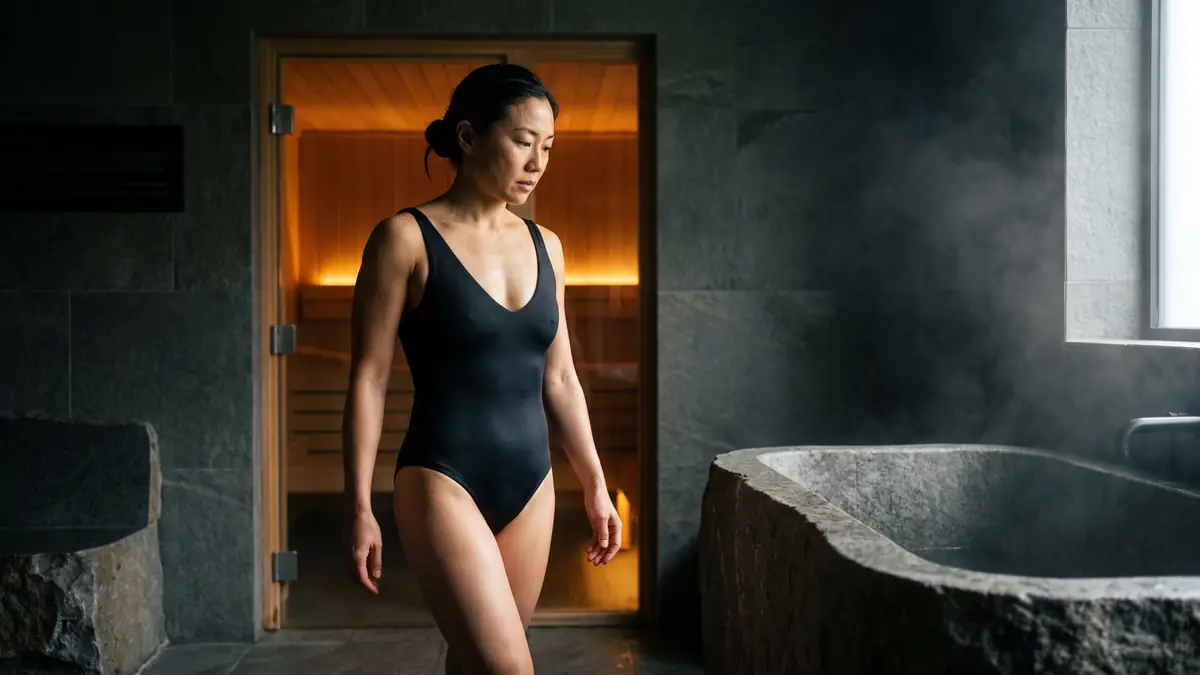
A contrast therapy session is ten to fifteen minutes in a sauna at 80 to 85 °C, two to three minutes in water at 6 to 8 °C, five to ten minutes of rest, repeated two or three times. In Dubai the protocol needs one adjustment that a Finnish guide does not mention: most people arrive at the spa already hot and short of fluid, from a padel court, a golf course or a run in 35 °C evening air. This article gives the protocol we hand clients at commissioning, adjusted for the Gulf.
The protocol, three rounds
| Step | Time | Temperature | Notes |
|---|---|---|---|
| Warm shower | 2 min | warm | rinse, wet the hair |
| Sauna, round 1 | 10–12 min | 80–85 °C | lower bench first, upper bench when comfortable |
| Cold plunge | 2 min | 8 °C | in to the neck, slow nasal breathing, out before shivering |
| Rest | 8–10 min | room | sit, drink water, feet warm |
| Sauna, round 2 | 12–15 min | 80–85 °C | löyly now, not before |
| Cold plunge | 2–3 min | 6–8 °C | |
| Rest | 8–10 min | ||
| Sauna, round 3 | 10 min | 80 °C | optional |
| Cold plunge | 2–3 min | 6 °C | |
| Rest and finish | 15 min | end warm, not cold; drink 500 ml |
Beginners do two rounds, two minutes in the cold at 10 °C, and build over a month. Colder is not better: 4 °C water is for experienced users and adds risk without adding benefit for most people. The cold plunge page explains why the basin is commissioned at 6 to 8 °C.
The Dubai adjustment: arrive cooled and hydrated
A sauna is a heat load. So is a padel match at 38 °C, a round of golf in April or a run along the Marina in September. Stacking one on the other is where people feel faint on the upper bench. The rule we give clients: after training in heat, drink 500 to 750 ml with electrolytes, take a cool shower, sit for thirty minutes, and only then start the protocol. Evening sessions, after 8 pm, are the norm here for the same reason; the body has cooled, the villa is quiet and the plunge is coldest after the chiller has had a still afternoon.
Why the sequence matters
Heat first, cold second, rest third. The sauna opens peripheral circulation and raises core temperature; the plunge triggers vasoconstriction, the gasp reflex and a surge of noradrenaline, and the return to warmth is where people report the calm and the sleep that follows. Cold first and heat second produces the opposite sensation and most people abandon it. The plunge belongs three steps from the sauna door for exactly this reason; the villa wellness suite layout article draws it.
Padel, golf, running, cycling
Dubai’s recovery clients are padel players, golfers, runners and cyclists, and each has a habit.
- Padel and tennis: a short sauna, a full plunge and a long rest. The cold is the point; the heat is the preparation.
- Golf: longer sauna rounds, gentle cold, focus on the back and shoulders in the rest.
- Running and cycling: hydration first, then the standard protocol; long-distance athletes often do a cold-only session on the day after a long run and contrast on the second day.
- Gym and strength: contrast on rest days rather than immediately after heavy lifting, when some athletes prefer to delay the cold.
None of this is medical advice; it is what our clients report works for them, and what a physiotherapist would recognise.
Snow room instead of a plunge
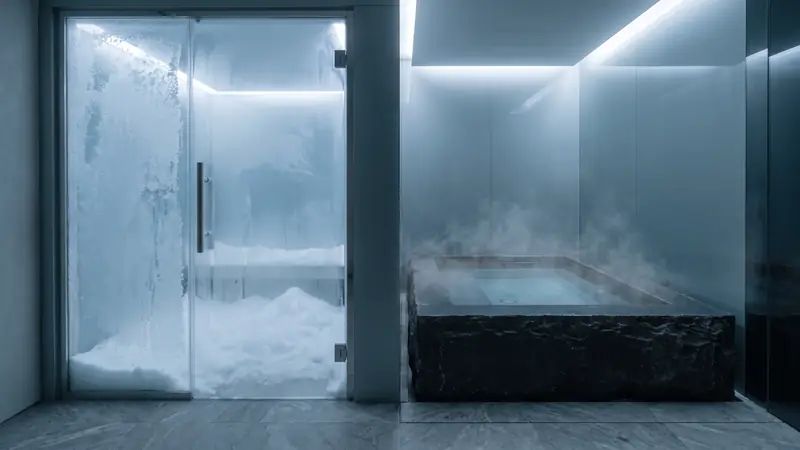
For a family member who will not submerge, a snow room delivers a milder cold over five to ten minutes and fits the same rounds; the snow room versus cold plunge comparison explains the difference in intensity. A cold shower at 18 to 20 °C is the minimum useful cold and is where most people should start.
Safety rules we do not soften
- Never plunge alone the first time.
- Never after alcohol.
- Out of the cold before shivering starts.
- A doctor’s word first for anyone with a heart condition, uncontrolled blood pressure, Raynaud’s, epilepsy or pregnancy.
- Children do not use the plunge at 6 °C; a cold shower or the snow room is their cold.
- Rehydrate after training in heat before any heat exposure.
The rooms the protocol needs
A sauna sized to hold 80 to 85 °C with people in it, which the heater sizing guide explains; a plunge that holds 6 to 8 °C in August, which the chiller sizing guide explains; a shower between them; and a place to sit warm for ten minutes with water within reach. That is the essential suite on the villa wellness suite page, and it is the reason we design the sequence before the finishes.
Send a note on what you train for and where the rooms would go. A designer will reply with the sequence that fits the routine and a budget band.