Yes, you can put a sauna in a Dubai apartment, and in most towers the answer is an infrared cabin on a socket circuit, approved with a specification sheet and a fit-out permit in a few days. A traditional sauna with a stone heater is possible in penthouses and duplexes with three-phase supply and a cooperative building engineer; a steam room is possible in the rare apartment with a large drained shower and a building that accepts a generator circuit. This article explains what each tower type approves, why applications are refused, and how to submit one that is not.
The three questions building management asks
- Does it change the electrical load? A plug-in cabin does not. A heater on a new dedicated circuit does, and the building’s engineer will want the DEWA submission before approving.
- Does it involve water? A wet room needs a drain, tanking and a generator, and most towers will not approve changes to drainage in a residential unit.
- Is anything on the balcony or the facade? Balconies are common-area facade in most towers; a cabin there is refused, always.
Infrared cabins answer no to all three, which is why they are approved. The infrared sauna page compares the cabins we install.
What each apartment type can take
| Apartment | Typical supply | Sauna that fits | Approval |
|---|---|---|---|
| Studio to 2-bed, Marina, JLT, Downtown | single-phase 60–80 A | infrared cabin 1.7–2.4 kW | fit-out permit, days |
| 3–4 bed, Bluewaters, Emaar Beachfront, Al Reem | single-phase 80–100 A | infrared 3 kW or 4.5 kW compact heater on dedicated circuit | permit + engineer sign-off, 1–3 weeks |
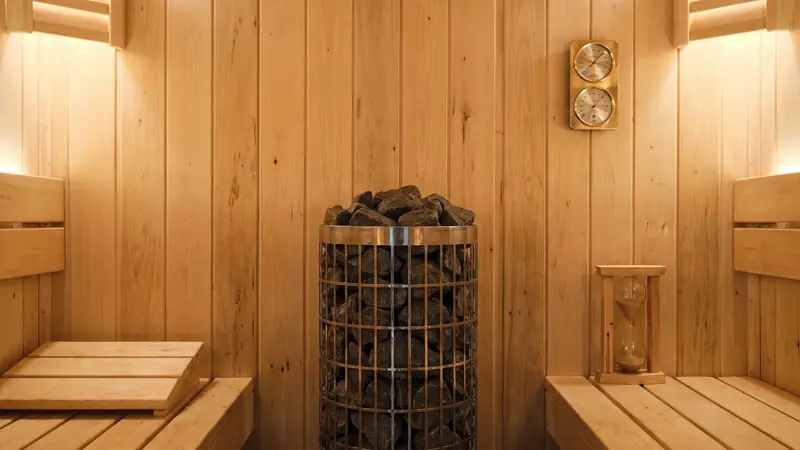
| Penthouse, duplex | three-phase 100 A+ | 2–4 seat glass sauna, 6–9 kW heater | permit + DEWA submission, 2–4 weeks |
| Penthouse with large drained shower | three-phase | steam shower, 4.5–6 kW generator | permit + DEWA + drainage review |
The 4.5 kW compact heater is the largest single-phase heater we install, and it heats a two-seat cabin to 80 °C in about 40 minutes. Why larger rooms need three-phase power is covered in our sauna heater kW guide.
The submission that gets approved
Applications fail on vagueness. What we submit for every apartment installation:
- The manufacturer’s specification sheet: rated power, voltage, socket or circuit type, certification.
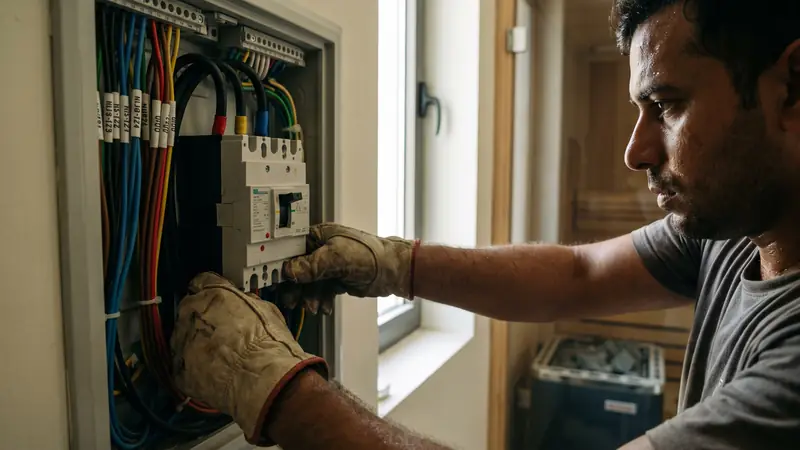
- A one-line circuit statement, confirmed from a photo of the apartment DB board, showing which breaker the cabin uses.
- A floor plan with the cabin position and clearances to walls and sprinklers.
- For a heater, the single-line diagram and load calculation for the DEWA submission, prepared by our consultant; the DEWA approval page describes it.
- A method statement for delivery: date, service lift, panel sizes, protection of the corridor, waste removal the same day.
Submitted through the tower’s fit-out portal, an infrared cabin is typically approved within a week and a penthouse sauna within a month.
Why applications are refused
- A cabin proposed for the balcony.
- A heater with no brand and no data sheet.
- “Electrical by owner,” with no consultant behind it.
- A steam room proposed in a bedroom with no drain.
- A contractor who cannot answer the engineer’s question about the circuit.
Each of these is fixable except the balcony, and we tell clients that before the application.
Where the cabin goes in the apartment
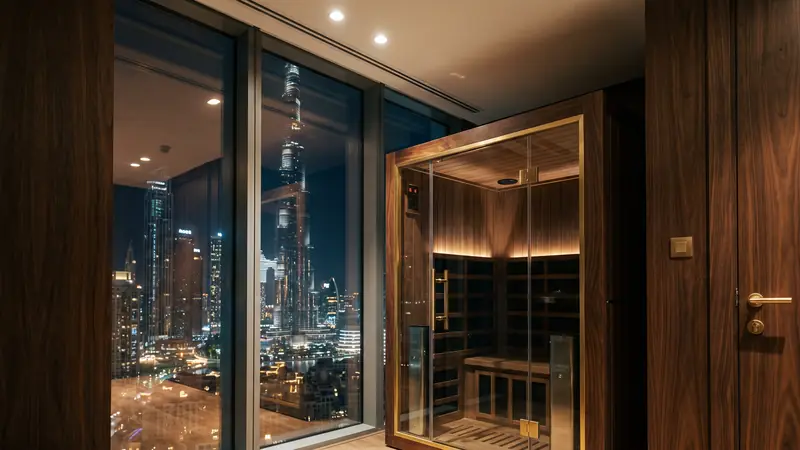
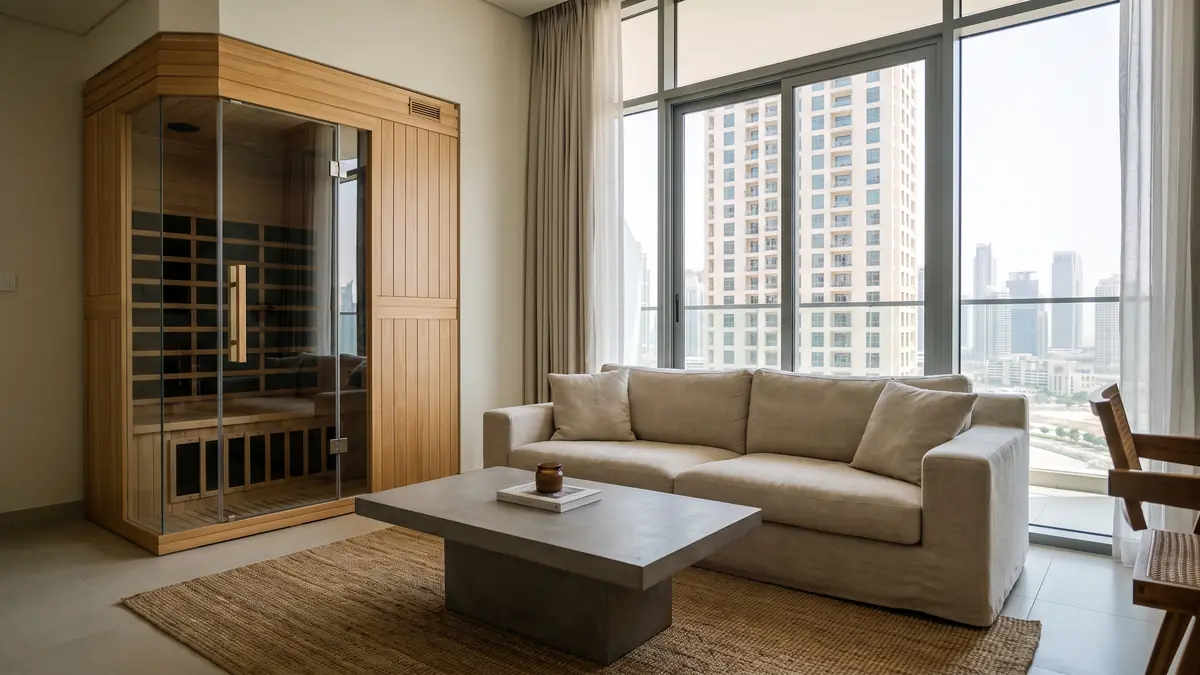
The dressing room is the most common place: it is enclosed, close to the shower and usually has a spare socket circuit. Next, a corner of the master bedroom by the window, positioned so the glass front faces the view, which is what Downtown and Marina owners want. In larger apartments, a spare bedroom becomes a small wellness room with the cabin, a lounger and, increasingly, a soft-shell hyperbaric chamber. Living rooms work in open-plan apartments where the cabin’s timber reads as furniture.
Ventilation and neighbours
An infrared cabin adds a little warmth and no humidity to the room, and the apartment AC copes. A traditional sauna in a penthouse needs a filtered air inlet from the apartment and an extract fan, ducted to the bathroom extract riser where the building allows, and a door that is closed between sessions so the heat does not migrate. Steam showers need the bathroom extract to run after the session. None of this affects neighbours, and none of it is visible from outside, which is the point.
Delivery on the thirtieth floor
Before anything is ordered, someone measures the lift car, its doors and the tightest turn on the way to the flat, and the cabin is split into pieces that pass all three. The building fixes the delivery window; one trip up the service lift is normally enough. Putting an infrared cabin together takes a morning, a glass sauna a couple of days, and the packaging leaves with the installers. The Downtown Dubai and Dubai Marina pages describe the tower-by-tower experience.
Cost in an apartment
An installed infrared cabin costs AED 28,000 to 55,000, a compact glass sauna in a penthouse AED 65,000 to 140,000, a steam shower conversion AED 75,000 to 95,000; benchmarks are on the pricing page. Prefab cabins are the norm in apartments for good reasons, set out in the prefab versus custom article.
Photograph the room, the window and the open DB board, add the name of your building, and send it on WhatsApp; by the next business day you will know what the tower is likely to accept and what it costs.